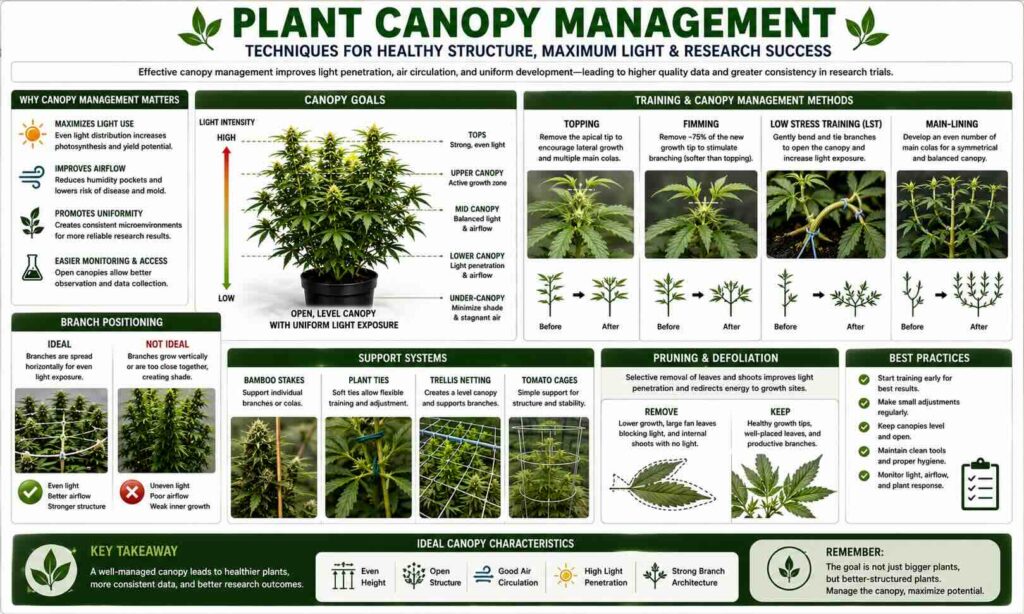
Training techniques have become an important part of modern cannabis cultivation because they help growers manage plant structure and make better use of available space and light. While genetics provide the foundation for a plant’s potential, cultivation practices can influence how efficiently that potential is expressed throughout the growing cycle. For many cultivators, training is one of the most valuable tools available for improving canopy management and encouraging more uniform plant development.
Successful training does not require complicated methods. In many cases, simple and consistent techniques applied at the right time can help create a healthier and more productive growing environment. Understanding the principles behind plant training allows growers to make informed decisions that support long-term cultivation success.
Why Plant Training Matters
Cannabis plants naturally develop according to their genetic characteristics, but growers can influence growth patterns through various training techniques. The primary objective is usually to improve light distribution, create a more balanced canopy, and make better use of available growing space.
A well-managed canopy allows more plant surfaces to receive consistent light exposure. This can help create a more uniform growing environment and simplify overall cultivation management.
Training is not about forcing plants into unnatural shapes. Instead, it involves guiding development in a way that supports cultivation goals.
Careful planning often produces better results than aggressive intervention.
Low-Stress Training Approaches
Low-stress training, often referred to as LST, is one of the most widely used plant management techniques. The basic principle involves gently guiding plant growth to encourage a broader and more even canopy.
Many growers appreciate low-stress methods because they allow gradual adjustments while minimizing disruption to plant development. These techniques can often be adapted to different cultivation styles and environments.
Consistency is important when applying training methods. Small adjustments made over time are generally easier to manage than dramatic changes made all at once.
Patience often plays a key role in successful canopy management.
Canopy Management and Light Distribution
One of the major benefits of plant training is improved light distribution. Uneven canopies can create shaded areas that receive less exposure, while a more balanced structure helps maximize the effectiveness of available lighting.
Indoor growers frequently focus on canopy management because artificial lighting works most efficiently when distributed evenly across plant surfaces. Outdoor cultivators may also use training techniques to improve sunlight exposure and airflow throughout the plant.
Better light distribution can contribute to more consistent plant development and easier environmental management.
Efficient use of available light remains one of the primary goals of cultivation training.
Combining Genetics and Cultivation Practices
Training techniques work best when paired with suitable genetics. Different cultivars respond differently to cultivation practices because of their growth patterns, structure, and overall development characteristics.
Growers interested in exploring modern autoflowering genetics can learn more through www.ministryofcannabis.com/fr/graines-autofloraison/. Understanding how genetics interact with cultivation methods helps growers make better decisions and create more effective training strategies.
Strong cultivation results usually come from combining quality genetics with consistent environmental management and thoughtful plant care.
Training is most effective when it complements the natural characteristics of the plant.
Observation and Continuous Improvement
Every cultivation environment is different, which means growers often benefit from observing plant responses and refining their techniques over time. Keeping records can help identify which methods work best within a specific setup.
Experience allows cultivators to recognize how plants respond to different approaches and make gradual improvements from one growing cycle to the next. This process of continuous learning often contributes more to long-term success than any individual technique.
Additional information regarding CBD and cannabis-related health topics can be explored through https://www.passeportsante.net/fr/Actualites/Dossiers/DossierComplexe.aspx?doc=cbd.
Successful cultivation is often built through observation, patience, and steady improvement.
Final Thoughts
Training techniques can help growers maximize the efficiency of their cultivation space while creating a more balanced and manageable canopy. Whether using low-stress approaches or broader canopy management strategies, the goal remains the same: support healthy plant development and make better use of available resources.
By combining quality genetics, environmental consistency, and thoughtful training practices, growers can create conditions that encourage stronger growth and more productive cultivation cycles over the long term.